What is considered in the Business Section?
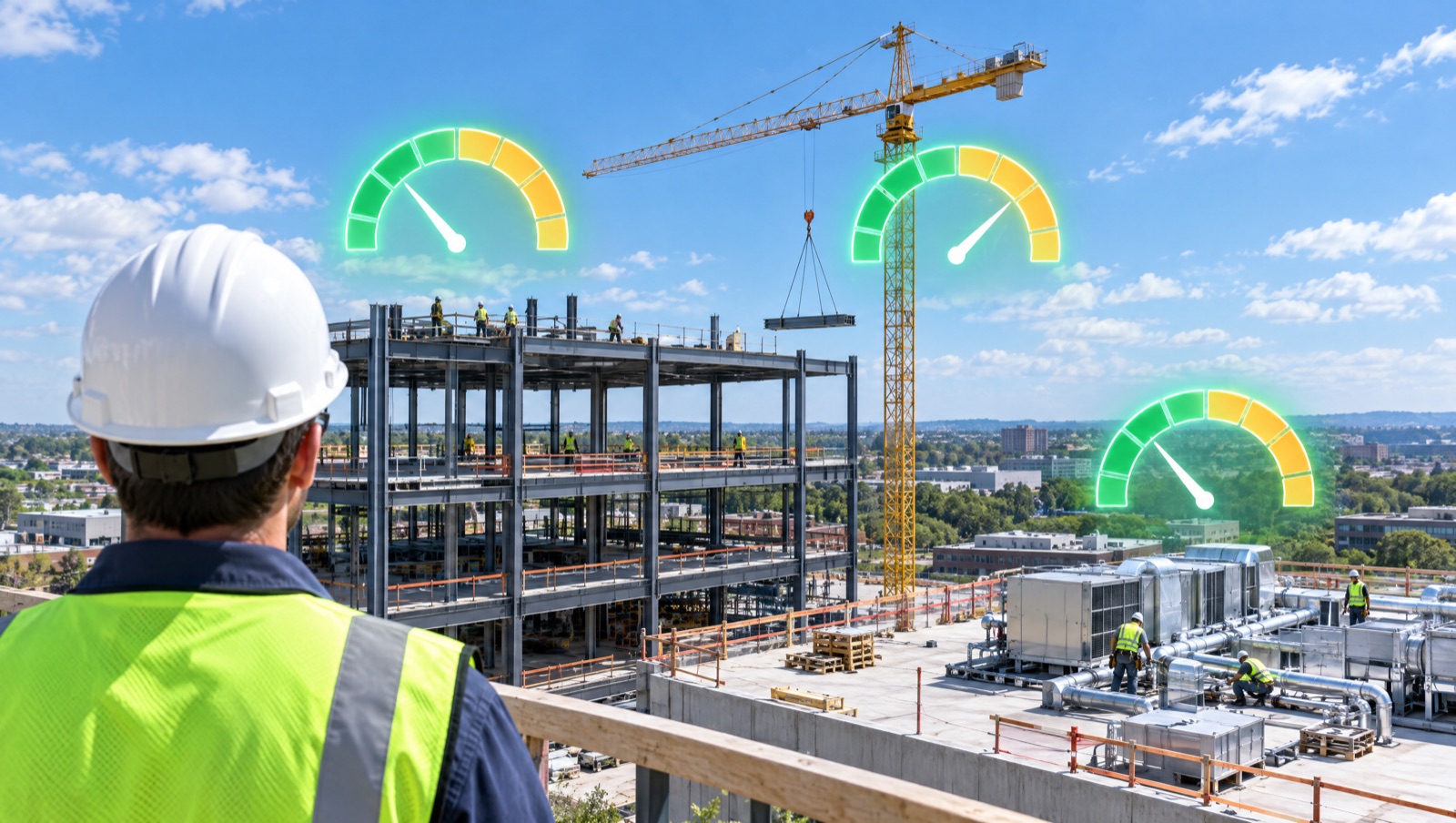
The COMPASS Q Score, the construction credit score, provides a standardized, independent assessment of a subcontractor. The Q Score is used as a consistent starting point for prequalification.
Operational expertise shows up in many parts of a business. Company stability, management experience, growth, diversification, backlog, and other operating indicators all provide insight into how a subcontractor operates. As the most heavily weighted section of the Q Score, the Business Section brings these measures together as part of the Q Score’s assessment of operational expertise.
Measures include:
- Company Stability: employee turnover, years in business, etc.
- Management Experience: executive tenure, experience, etc.
- Growth: current and historical growth rates.
- Diversification: customer, geographic, and revenue-stream diversification.
- Backlog and Revenue Characteristics: company size, backlog, etc.
- Legal History: legal history and related measures.
- Other Operating Indicators: additional measures relevant to the subcontractor's operational expertise.
Each measure is assessed against a defined benchmark or threshold and forms part of the section score. The Business Section then contributes 50% to the initial Q Score.
For additional detail on the measures, benchmarks, and analytical processes used to assess the Business Section, read the COMPASS Q Score Methodology here.
What does Financial Capacity Measure?
Financial statements contain a substantial amount of information about a subcontractor’s financial position. Liquidity, leverage, profitability, turnover, and financial trends each provide a different perspective. Financial capacity is meant to capture a subcontractor’s ability to finance a project through the strength of their balance sheet and income statement.
Measures include:
- Liquidity: current ratio, cash ratio, quick ratio, operating cash flow ratio, etc.
- Leverage: liabilities-to-equity, interest coverage, debt ratio, debt service coverage ratio, etc.
- Turnover and Operating Efficiency: asset turnover, working capital turnover, etc.
- Profitability: return on assets, net margin, return on equity, EBITDA margin, etc.
- Financial Statement Trends: where sufficient history is available.
Each measure is assessed against a defined benchmark or threshold and forms part of the section score. The Finance Section then contributes 40% to the initial Q Score.
For additional detail on the measures, benchmarks, and analytical processes used to assess the Finance Section, read the COMPASS Q Score Methodology here.
What is considered in the Health & Safety Section?
A subcontractor’s Health & Safety track record provides important insight into its safety performance. Incident history, safety personnel, experience modification and comparable measures, and material citations help establish that record. The Health & Safety Section considers these factors as part of the Q Score’s assessment of a subcontractor’s Health & Safety track record.
Measures include:
- Safety Leadership and Programs: safety leadership, programs, personnel, etc.
- Incident History: incident history, claims-related measures, etc.
- Health & Safety Rates and Measures: Experience Modification Rate (EMR), Recordable Incident Rate (RIR), WCB measures, and comparable measures.
- Citations and Severe Incidents: material citations, severe incidents, fatalities, etc.
Each measure is assessed against a defined benchmark or threshold and forms part of the section score. The Health & Safety Section then contributes 10% to the initial Q Score.
For additional detail on the measures, benchmarks, and analytical processes used to assess the Health & Safety Section, read the COMPASS Q Score Methodology here.
← Previously · Q Score Series, Article 1 How to Read a Q Score